How To Start Minimalism

Diving into minimalism might seem like a big leap, maybe more so if you’re surrounded by stuff. But here’s the thing – minimalism is about finding freedom and clarity in less, not about ditching all your beloved things overnight. It’s a mindset that celebrates intentional living, helping you focus on what truly matters.  If you’re still deciding whether minimalism is worth it, start with the benefits of minimalist living to see how it can reduce stress, improve focus, and support small-space living.

Beginning your minimalist journey can feel daunting, but starting with small, manageable steps can make the transition smoother. Begin by identifying areas in your life that hold unnecessary clutter. It could be your closet screaming for some TLC or a kitchen rocked by gadgets you’ve touched twice. Start decluttering one category at a time.  If you want a simple, step-by-step approach, check out how to declutter your space without getting overwhelmed. Cherish what brings you joy or serves a purpose, and part ways with the rest. It’s not just physical stuff – think digital clutter, emotional baggage, and overbooked schedules, too.

Minimalism doesn’t have to be a strict rulebook you follow to a T. It’s about adopting practices that enhance your life. Test out different strategies like the KonMari method (yes, thank you, Marie Kondo!), or try a capsule wardrobe. The idea is to find what resonates with you and stick with it, making a meaningful impact on your daily grind. Get inventive!

Here’s a tip: don’t get carried away by myths that minimalism means you need an empty room with five things in it. It’s about editing your life to make room for more adventure, creativity, and passion. Plus, don’t sweat the mistakes every newbie might slip into. Common missteps like getting rid of too much too fast can lead to regrets. Take your time to adapt and adjust.

  • decluttering too fast
  • Trying to copy someone else’s version of minimalism
  • Keeping everything “just in case”

Seeing minimalism as a tool can help you gain more balance, reduce stress, and improve mental clarity, making it easier to connect with the things and people you love. So give it a whirl! Your simpler, happier, and more fulfilled life may just be a clean shelf away. Happy simplifying!

Mastering the Minimalist Mindset: The 5-7 Rule

Ever heard of the 5-7 rule in minimalism? It’s a game-changer for keeping your space streamlined and your mind free. The idea is pretty simple: limit personal items or categories to a maximum of five to seven at any given time. Think of it as curating your life like a gallery where each piece has its own place and purpose.

This guideline is more than just about counting things. It pushes you to evaluate what’s truly necessary. It might make you think twice about keeping that tenth pair of sneakers or the stack of unread magazines looming in the corner. The key is to personalize what fits within your lifestyle without compromising comfort or style.

Practicality is the heart of the 5-7 rule. In your closet, it might mean choosing versatile pieces that work together, making your outfits effortlessly chic without a morning battle. In the kitchen, it could translate to maintaining only essential gadgets, focusing on quality over quantity, which is especially useful if counter space is at a premium.

Now, mastering this mindset doesn’t require you to become a monk with limited possessions. It’s about balance. Maybe your vinyl collection or art supplies bring you joy – just be mindful of the space they occupy and their role in your daily life. The real power lies in making deliberate choices and avoiding the “buy more, use less” trap.

The beauty of the 5-7 rule is it blends necessity with personal expression. You’re encouraged to keep the things you love but with a keen eye on functionality and joy. It’ll lead you towards a more thoughtful way of living, inviting peace and simplicity into every corner of your life.

Minimalism and the Mind: Is It Beneficial for ADHD?

For those grappling with ADHD, minimalism might just be a breath of fresh air. The clutter-free approach could ease overwhelming feelings and help tune out distractions, offering a straightforward solution to boost focus.

A cluttered environment often mirrors a cluttered mind, especially for individuals with ADHD. Simplifying spaces can help create a calming atmosphere where concentration comes easier. By reducing items that compete for attention, it’s possible to lower anxiety levels and make decision-making less of a chore.

Building a minimalist-friendly space tailored for ADHD needs isn’t rocket science. Think clean and serene – fewer knick-knacks, more open space. Even incorporating calming colors and smart storage solutions can make a big difference.

For someone with ADHD, sustainability also plays a role in how minimalism is practiced. Establish clear zones and routines, making sure everything has a home. This organization cuts down time wasted looking for things and lowers frustration, allowing more energy for fulfilling activities.

First-hand accounts share how minimalism makes room for creativity and enhances productivity. Some find that once they’re freed from the chaos, they can focus better on what truly counts, whether it’s a project at work or an evening hobby.

The journey toward embracing minimalism while managing ADHD is unique for everyone. The trick is to experiment with what brings harmony and ease to your life. It’s about creating an environment that supports you, not boxes you in. Embrace it, tweak it, and let it work wonders for your mind!
How To Create Minimalist Space

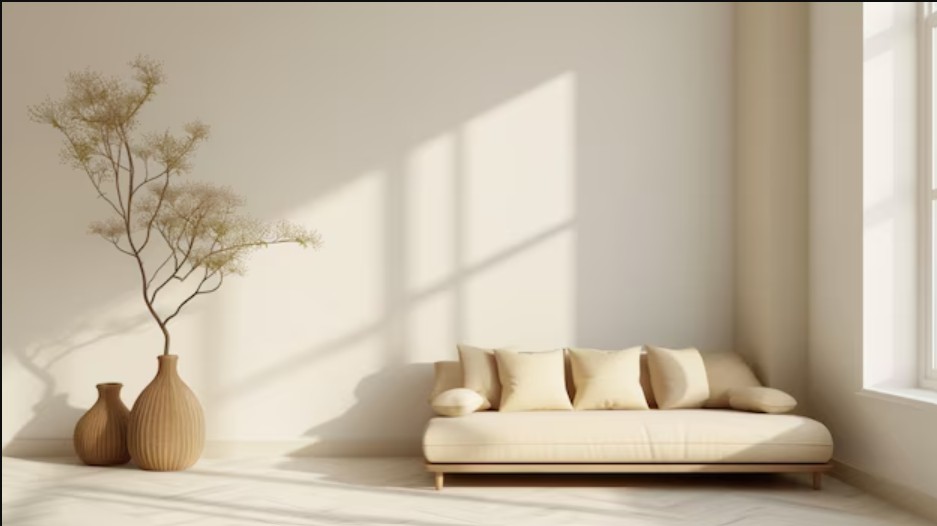
Minimalism is more than just tossing out old clothes or clearing your shelves—it’s about finding meaning in simplicity. This approach is all about creating environments that promote tranquility and functionality. If you want the “why” behind minimalist spaces (stress reduction, focus, saving money), start with the benefits of minimalist living before you redesign your home. 

Stepping into minimalist living starts with a shift in mindset. It’s crucial to recognize what truly holds value in your life and what clutters your space, both physically and mentally. This mindset helps drive decisions when you start the decluttering process.

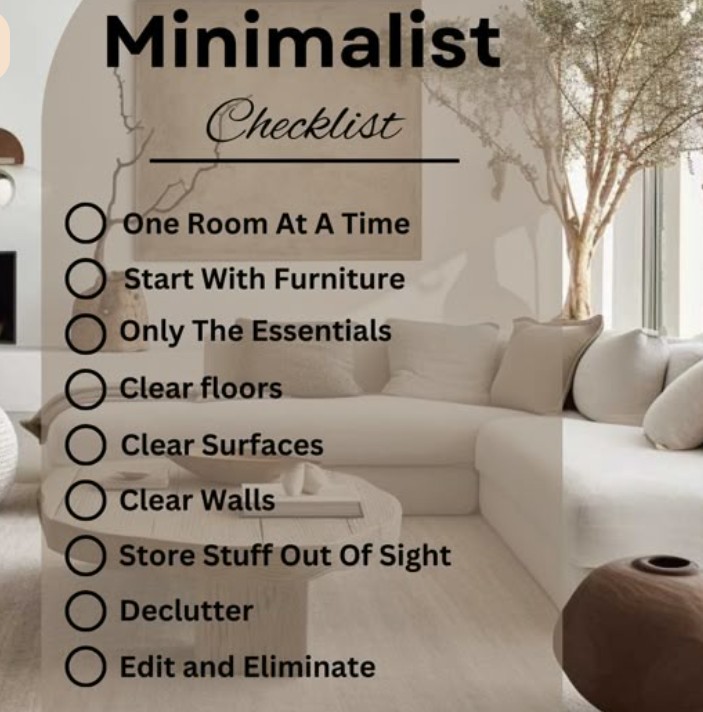
When you aim to create a minimalist space, focus on mindful choices. Begin by evaluating each room’s purpose and determine what items support or conflict with that purpose.  If you haven’t cleared clutter yet, start with this step-by-step guide on how to declutter your space first — minimalist design is much easier once the excess is gone. This could mean clearing out furniture that takes up valuable space or reorganizing items in a way that seems more intentional.

The transition to minimalism isn’t about deprivation. It’s about making conscious choices that contribute to a lifestyle centered around freedom and intention. Ask yourself what ignites joy and utility in your life.

Implementing practical steps like starting small with one room or even just a drawer can make it more manageable. As you progress, you’ll find it easier to identify what enhances your space and what doesn’t. With each step, you’re not only removing clutter but also creating opportunities for more open and inviting spaces.

Navigating Common Pitfalls: Avoiding Minimalist Mistakes

Jumping into minimalism often means going through some trial and error. People sometimes mistake minimalism for just another purchase spree of ‘simple’ decor or furniture that’s marketed as minimalist but doesn’t fit their real needs.

One common mistake is thinking that buying storage solutions will solve clutter issues. It’s not about hiding stuff away in fancy boxes. If an item doesn’t serve a purpose or bring joy, it’s better to let it go instead of just tucking it away neatly.

Another pitfall is the organized chaos trap. It’s when you think everything has a place, yet the space still feels overwhelming. Minimalism should bring clarity and a clear sense of order, not just a shuffle of belongings.

It’s crucial to keep your space balanced, which involves ongoing assessments of your home environment. Check in regularly to see if new items have snuck in and disrupted the minimalist balance you’ve worked on achieving.

To keep clutter from creeping back, set some ground rules for what gets to stay or enter your space. Having a ‘one-in, one-out’ policy can help maintain order. The key is to remain conscious of your surroundings and the role each item plays in your life.

Rules of Minimalist Decor: Simplicity with Style

Mastering minimalist decor doesn’t mean stripping your home bare. It’s about curating with intention, where every piece has a purpose and contributes to a peaceful aesthetic.

  • Stick to a simple color palette
  • Use multi-purpose furniture
  • Keep surfaces visually clean (5–7 items max)

A popular guideline is the 5 7 Rule. This rule suggests maintaining no more than 5 to 7 items on any flat surface like tables or shelves. It helps keep visual clutter in check while encouraging thoughtful selection of decor elements.

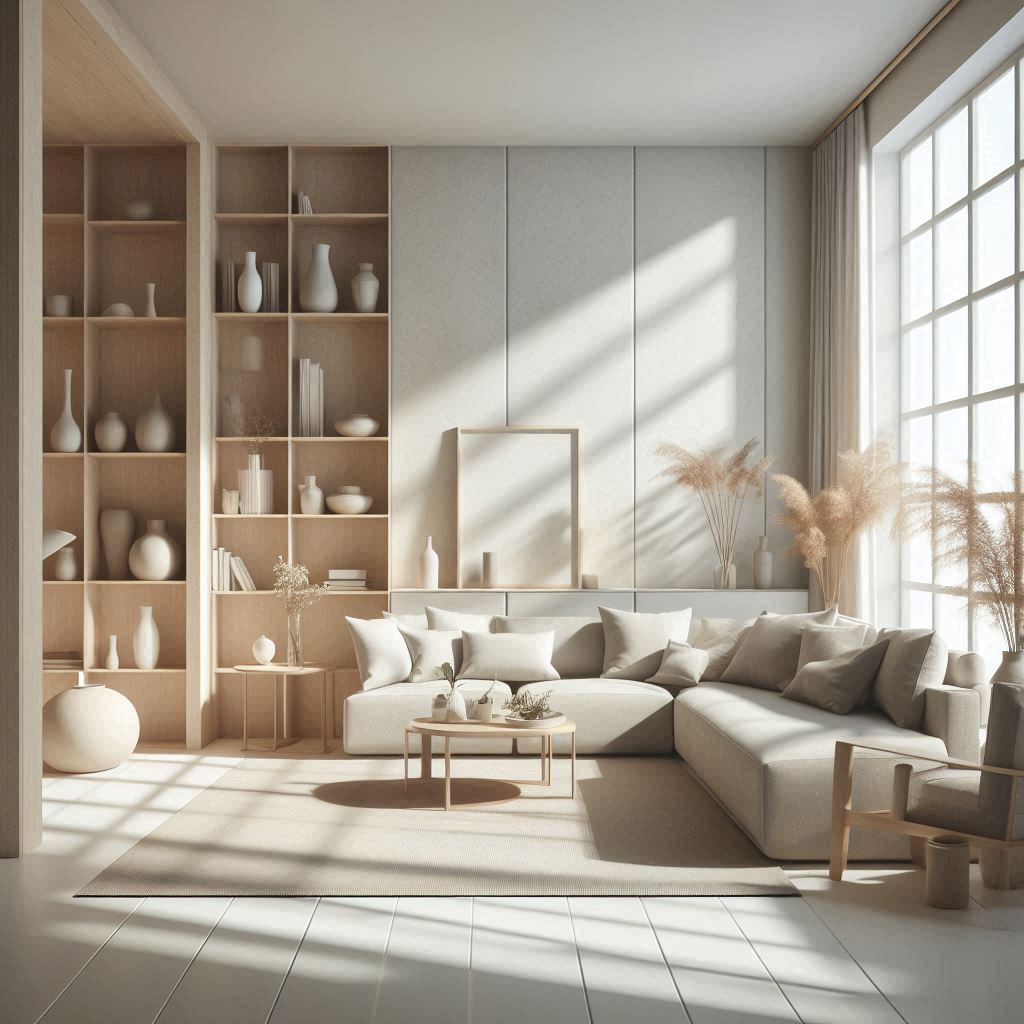
At the heart of minimalist decor are core principles that emphasize simplicity. This includes using a neutral color palette that amplifies natural light and maximizes a sense of space. Whites, grays, and soft earth tones often dominate, creating a calming atmosphere.

Multipurpose items are a minimalist’s best friend. Think furniture that doubles as storage, or decor pieces that blend aesthetic appeal with practical use. These selections can make your spaces more dynamic and efficient.

Remember that keeping it minimal doesn’t mean losing personal touches. Select a few cherished items to display, ensuring they add personality without overwhelming the simplicity of your space. It’s all about striking the right balance between minimalism and representing who you are.

The essentials of minimalist decor revolve around functionality. Less really is more, driving home the idea that quality and utility trump quantity every time. By investing in a few high-quality items, your space remains stylish yet understated.

Tiny Home Space Optimization Tips

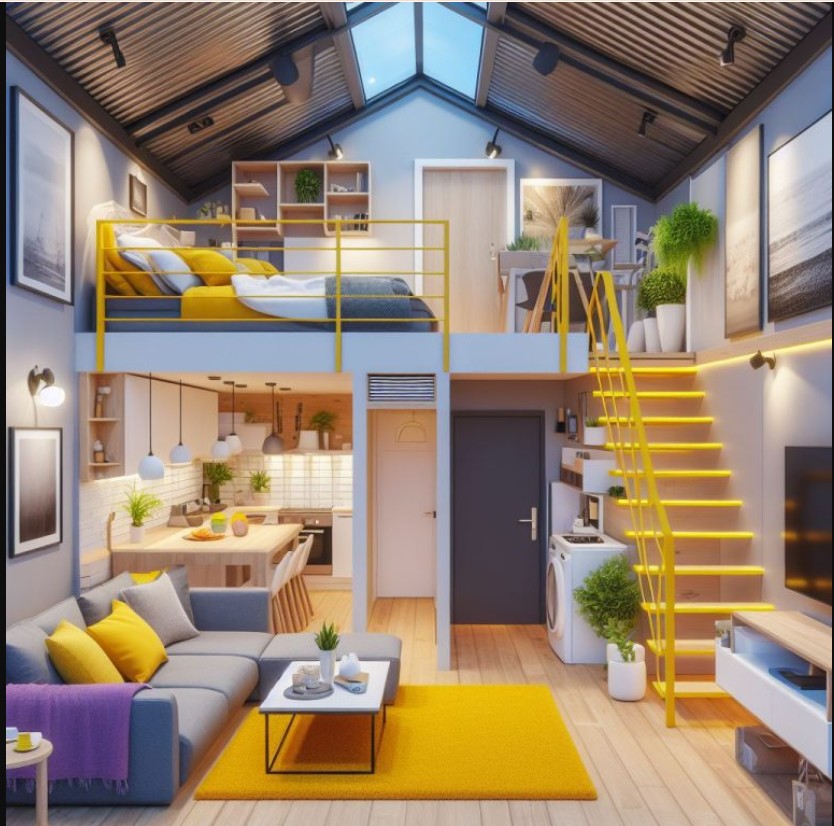
Living in a tiny home can be a game-changer when it comes to space management. Let’s talk furniture. Multi-functional furniture is worth its weight in gold. Think beds that double as storage units or sofas that unfold into beds. These nifty pieces mean you make the most of every square inch.

Storage works best when it’s built into the overall floor plan. If you’re still shaping your design, this guide to tiny home layout ideas explains how different layouts affect storage, comfort, and flow.

Ever considered using that vertical space? Shelves that go floor to ceiling are a blessing. They not only lift items off the floor but also draw the eye upward, making your space feel bigger. You can also use wall-mounted hooks and racks for everyday items, freeing up counter and floor space.

Foldable and convertible elements can transform your living space in seconds. Imagine a dining table that folds into the wall when not needed or a work desk that disappears after hours. These space-savers ensure you’re not sacrificing living space for functionality.

Color can do magic. Light, soft hues open up rooms, while darker shades might shrink them a bit. Mirrors work wonders too, reflecting light and giving the illusion of a larger area. With the right palette, your tiny home can feel airy and comfortable.

Avoiding Common Mistakes in Tiny Home Design

One pitfall in tiny home design is lighting, or should I say, lack of it. Without the right lighting, even the most spacious of tiny homes can feel cramped and uninviting. Natural light is your best friend. Large windows or skylights can flood your space with sunlight, making it feel larger and more welcoming.

Balancing aesthetics with functionality is a tightrope walk. Sure, that vintage trunk looks cute, but does it serve a purpose? Furniture and decorations should pull double duty, offering utility alongside style. It’s all about making smart choices that reflect personal style without compromising on space.

Clutter is the enemy, and it can happen fast in a small space. Custom storage solutions can make a big difference here. From built-in shelving to hidden under-seat compartments, personalized storage options help keep belongings organized and out of sight.

The mental impact of living in a cramped space shouldn’t be underestimated. Overstuffed homes can lead to stress and anxiety. Prioritizing an open, airy vibe with thoughtful layouts and minimal clutter makes for a more peaceful living environment. 

Layout style also plays a major role in functionality. Comparing open-concept vs compartmentalized tiny home layouts can help you decide which setup fits your lifestyle best.

Optimizing Small Spaces: Proven Strategies and Solutions

When it comes to optimizing compact living areas, modular units can be a real lifesaver. These units allow for flexible arrangements to suit your needs of the moment, whether it’s extra seating for guests or a workspace for those day-to-day tasks. You can reconfigure your setup without breaking a sweat.

Adopting a minimalist lifestyle can go a long way. It’s not just about reducing possessions but about keeping only the essentials that add value to your life. With fewer items around, the space feels larger and more breathable, leading to a more enjoyable living experience.

Mirrors aren’t just for vanity—they’re strategic space enhancers, too. By placing them opposite windows or near light sources, they reflect light around the room, crafting an illusion of openness that can make even a tiny room feel expansive.

Creative layouts do wonders. Open plans can be tricky when space is tight, but smart arrangements can conquer layout problems. Think of seating that divides a living area and a workspace without hefty partitions. It’s about creating zones in a way that works for you without crowding.

Clever Tiny Home Design Hacks and Innovations

Embracing mobility is key in tiny home living. Incorporating hidden wheels and sliding mechanisms in furniture pieces or partitions can make daily life a breeze. This kind of flexibility allows for easy reconfiguration and can adapt the space to a variety of functions.

Kitchens in tiny homes need a little magic touch when it comes to storage. Think about incorporating pull-out pantry shelves and magnetic wall strips for utensils. These hacks maintain organization and accessibility without eating up valuable counter space.

Clothes management can also get tricky in cramped quarters. Rotating seasonal wardrobes can help—store off-season clothes in vacuum bags. Use every nook, like the backs of doors or under-bed drawers, to tuck away garments without intruding on living areas.

Spatial zoning doesn’t have to mean walls. Simple tweaks, like varying flooring textures or employing strategic lighting, can define separate areas within an open plan. This is a smart way to maintain a sense of order while keeping everything open and airy.

Affiliate Disclosure

In 2015, the Federal Trade Commission released their new rules for Disclosure Compliance. These rules are set in place to ensure that readers or viewers of web media (blogs, Youtube videos, etc.) know if the blogger/presenter is sponsored, endorsed, or partnered with a different company. In blog terms, the readers need to know if the blogger is making money by sharing a link or product.

In compliance with the FTC guidelines, please assume the following about links and posts on this site: Any/all of the links daintydwelling.com are affiliate links of which I receive a small compensation from sales of certain items.

What are affiliate links?

Purchases are made on external affiliate company websites: When a reader clicks on an affiliate link located on daintydwelling.com to purchase an item, the reader buys the item from the seller directly (not from daintydwelling.com). Amazon and/or other companies pay daintydwelling.com a small commission or other compensation for promoting their website or products through their affiliate program.

Prices are exactly the same for you if your purchase is through an affiliate link or a non-affiliate link. You will not pay more by clicking through to the link.

I use two main types of affiliate programs:

1. Amazon affiliate links.

Daintydwelling.com is a participant in the Amazon Services LLC Associates Program, an affiliate advertising program designed to provide a means for sites to earn advertising fees by advertising and linking to Amazon properties including, but not limited to, amazon.com. Amazon offers a small commission on products sold through their affiliate links.

If a blogger links to an Amazon product (with a special code for affiliates embedded in the link), and a reader places an item in their “shopping cart” through that link within 24 hours of clicking the link, the blogger gets a small percentage of the sale. Amazon links are not “pay per click.” If you click on the product link and stay around Amazon and purchase something else, however, I will get commission on that sale.

Anytime you see a link that looks like astore.com/… or amazon.com… it can be assumed that it is an Amazon affiliate link.

2. Product affiliate links.
These affiliate links work the same way: if you click the link and buy the product, then the blogger gets a percentage of the sale or some other type of compensation. Things like e-book bundles, e-courses, and online packages are usually affiliate links, as well. Again, prices are not different if you use these affiliate links. You will not pay more by clicking through to the link. These links are not “pay per click”, unless otherwise denoted.

What about sponsored content?

I do not write sponsored posts. I want to bring you real, unbiased information. However, if a post is sponsored by a company and it is a paid sponsorship, I will disclose this clearly in the beginning of the post.

Privacy Policy

Who We Are

At [daintydwelling.com], we are committed to maintaining the trust and confidence of all visitors to our web site. In particular, we want you to know that [daintydwelling.com] is not in the business of selling, renting or trading email lists with other companies and businesses for marketing purposes.

In this Privacy Policy, we’ve provided detailed information on when and why we collect personal information, how we use it, the limited conditions under which we may disclose it to others, and how we keep it secure.

We take your privacy seriously and take measures to provide all visitors and users of [daintydwelling.com] with a safe and secure environment.

Cookies

[Daintydwelling.com] may set and access [daintydwelling.com] cookies on your computer.  Cookies are used to provide our system with the basic information to provide the services you are requesting.  Cookies can be cleared at any time from your internet browser settings.

Google Analytics

When someone visits [daintydwelling.com] we use a third party service, Google Analytics, to collect standard internet log information and details of visitor behaviour patterns. We do this to track things such as the number of visitors to the various parts of the site and interactions with the site. This information is processed in a way which does not identify anyone. We do not make, and do not allow Google to make, any attempt to find out the identities of visitors to our website.

Website Comments

When someone visits [daintydwelling.com], there may be an ability to submit comments on particular articles or pages.  When comments are submitted, you are entitled to use aliases or information that completely hides your identity. When a comment is submitted, the relevant details (name, email, website) that you provide are stored.  These details are stored so that we can display your comment back to you, and to anyone viewing the comment sections on the site. We do not verify information entered nor do we require verification.

Third Parties

There may be some circumstances where your IP address, geographic location, and other browser related details may be shared with third party companies.  We may share your above mentioned data with following third party companies from time to time.

Access to Your Personal Information

You are entitled to view, amend, or delete the personal information that we hold. Email your request to our data protection officer [Shannon] at [consumerindustries24@gmail.com] and we will work with you to remove any of your personal data we may have.

Changes to Our Privacy Policy

We may make changes to our Privacy Policy in the future, however, the most current version of the policy will govern our processing of your personal data and will always be available to you.

If we make a change to this policy that, in our sole discretion, is material, we will notify you by an update or email, where possible. By continuing to access or use our services, you agree to be bound to the terms of our Privacy Policy.

Future Tiny Home Living Trends

Tiny homes are getting a major style upgrade as we inch closer to 2026. Imagine open spaces with minimalist vibes, packed with personality through bold architectural flair. Architects are blending functionality with aesthetic charm, crafting spaces that are less about extravagance and more about smart, efficient design.

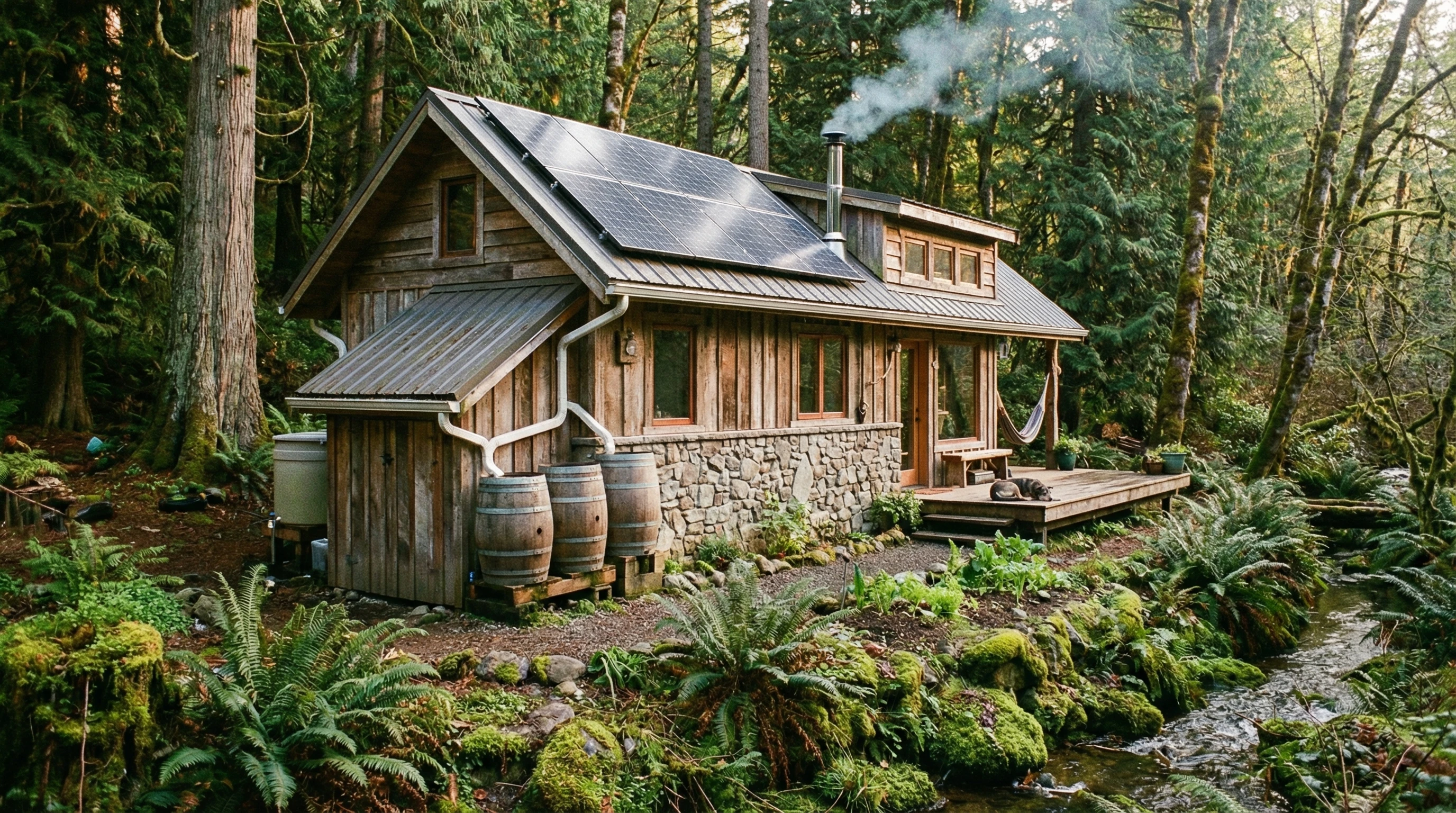
Sustainability is key. Builders are leaning heavily into eco-friendly materials like reclaimed wood and recycled steel. It’s about making homes that aren’t just beautiful, but kind to the planet too. You might notice roofs with solar panels and walls built from innovative materials that keep the heat in during winter and out in the summer. It’s all about working with the environment, not against it.

Modular and prefab designs are showing up more and more, making tiny homes flexible and faster to pop up. Think LEGO blocks but for grown-ups. You can mix and match sections to custom-fit your lifestyle needs, with rooms you can add or remove as your circumstances change.

Finally, smart home tech is having a moment in the tiny house scene. Imagine controlling your lights, thermostat, and security systems all from your phone, no matter where you are. Automation isn’t just a luxury for sprawling homes anymore. It’s about giving tiny homes the power to pack a punch without losing focus on simplicity and efficiency.

Is the Tiny House Trend Really Over?

The tiny house trend might be shifting, but it’s not disappearing anytime soon. Market forecasts suggest the tiny home industry continues thriving, driven by increasing interest in sustainability and cost-effective living. While some may say the buzz cooled, tiny living is solidly rooted, particularly among those seeking alternative housing solutions.

Societal shifts like remote work and minimalist lifestyle trends have a significant impact. More people are valuing experiences over possessions, leading them to downsize. The pandemic accelerated these changes, making folks rethink how much space they really need and how living small might cater to their new lifestyle focus.

Media portrayal plays a huge role too. Shows and documentaries highlight the charm and challenges of tiny living, shaping public opinion. Contrary to claims of its decline, media plays a part in keeping the inspiration alive and expanding people’s perception about the feasibility and attractiveness of tiny homes.

Real stories from tiny house owners reveal that the community is steadily growing. Co-housing arrangements, eco-villages, and urban tiny living projects are sprouting up, showcasing that tiny homes are more than a phase. They’re part of a broader movement towards more thoughtful, sustainable living choices.

What to Consider Before Embracing Tiny Living: A Buyers’ Insight

Jumping into the world of tiny living? There’s a bit to think about before making the leap. Tiny homes might look like a dreamy escape from excessive costs and clutter, but it’s crucial to dig a little deeper.

First off, why are you considering a tiny home? Many are driven by the lure of financial freedom. With lower utility bills and minimal maintenance costs, tiny homes offer a way to live more with less. A simplified lifestyle also brings joy to those seeking a less complicated, clutter-free life. And, of course, minimizing one’s ecological footprint is a top reason for many eco-conscious folks signing up for tiny living.

But before you order that adorable tiny abode, zoning laws need a careful look. These rules can vary greatly depending on location and might affect where, or if, you can park your tiny house. It’s essential to research these aspects early on to avoid any unexpected headaches later.

Living small isn’t merely about shrinking your space; it’s about resizing your life to fit different priorities. Evaluate if you’re ready to live in close quarters and adjust major lifestyle habits. It’s a trade-off between comfort and simplicity, freedom and restrictions. Explore how these align with your personal and professional goals before making a final decision.

Balancing restrictions with aspirations is a delicate dance, but one done mindfully can lead to extraordinary life satisfaction. Make sure the choice reflects your aspirations, not just current trends or romantic notions of what tiny living appears to be.

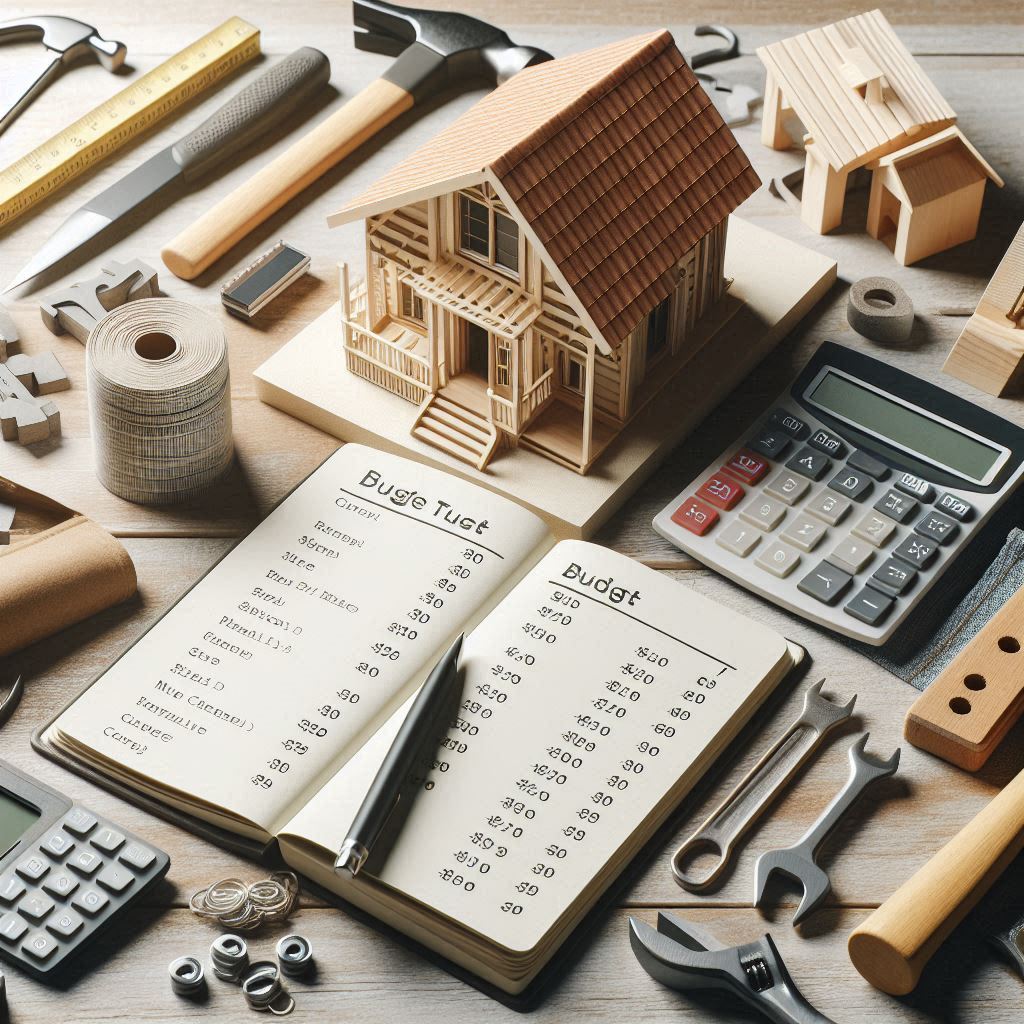
DIY Tiny Home Cost Estimator

DIY Tiny Home Cost Estimator

DIY Tiny Home Cost Estimator (2026 Planning Guide)

If you’re planning to build your own tiny home, estimating costs accurately is the difference between staying on budget and blowing past it. This guide walks you step-by-step through calculating your projected build cost using realistic 2026 price ranges.


Step 1: Choose Your Square Footage

Most tiny homes range between 100–400 sq ft.

Multiply your square footage by:

  • $200–$250 per sq ft (basic DIY build)

  • $300–$400 per sq ft (mid-range finishes)

  • $400+ per sq ft (custom / luxury)

Example:
A 250 sq ft DIY build at $225 per sq ft:
250 x 225 = $56,250

This gives you your baseline.


Step 2: Add Foundation or Trailer Costs

  • Trailer: $4,000–$10,000

  • Concrete slab: $3,000–$8,000

  • Pier foundation: $2,000–$6,000

Add this to your baseline.


Step 3: Estimate Systems (Plumbing, Electrical, HVAC)

Typical 2026 ranges:

  • Plumbing: $2,000–$7,000

  • Electrical: $1,500–$5,000

  • HVAC: $1,000–$4,000

  • Solar/off-grid system: $5,000–$20,000+


Step 4: Factor in Land & Utilities

Land: Highly variable
Utility hookups: $2,000–$15,000
Septic: $3,000–$10,000


Step 5: Add 15–20% Contingency

Always multiply total by 1.15–1.20 to protect against surprises.


Example Cost Scenarios

Budget DIY 200 sq ft

$45,000–$60,000

Mid-Range 300 sq ft

$70,000–$95,000

Off-Grid 250 sq ft Build

$80,000–$120,000+


Common Estimating Mistakes

  • Forgetting tool purchases

  • Ignoring permit fees

  • Underestimating cabinetry costs

  • Skipping contingency

  • Not budgeting for delivery

  • How to Adjust Your Estimate for DIY vs Hiring a Builder

While this estimator focuses on DIY builds, hiring a professional builder significantly changes your total cost.

Professional builds typically add 30–50% in labor costs. However, they often reduce mistakes, speed up construction timelines, and ensure code compliance.

If you’re unsure about your skill level, estimate both scenarios. Compare:

  • Full DIY cost

  • DIY + professional electrical and plumbing

  • Fully professional build

This comparison helps you choose realistically rather than emotionally.


Quick Budget Worksheet Formula

To create your own working estimate, use this simplified formula:

Base Square Foot Cost

  • Foundation/Trailer

  • Systems (Plumbing + Electrical + HVAC)

  • Interior Finishes

  • Land & Utility Setup

  • 15–20% Contingency

Total Estimated Project Cost

Writing this out manually helps reveal where adjustments can be made without compromising structural integrity or long-term value.


When to Recalculate Your Budget

Recalculate your estimate if:

  • Material prices increase

  • You upgrade finishes

  • You add off-grid systems

  • You change square footage

  • Zoning or permit requirements shift

Tiny home budgets are flexible — but only if you update them regularly.

Breaking Down the Costs of Building a Tiny Home

Building a tiny home can be an exciting but daunting task, especially when considering the costs involved. Let’s talk numbers, but in a way that makes cents. Starting with materials, this is where you set the foundation—not just literally. Essential materials include lumber, roofing, and sometimes trailers if you’re going mobile. These can add up, so keep an eye out for deals or reclaimed materials to save some bucks.

Getting to the core question: “How much would it cost to build a tiny house by yourself?” Well, a lot rides on your choices, from the design complexity to the quality of materials. On average, building costs can range anywhere from $10,000 to $30,000, or more, depending on how luxe you want to get.

Tools are an often overlooked part of the budget. If you don’t have basics like saws, drills, and wrenches, factor these into your calculations. Renting might offer savings if you can’t justify buying them outright.

For those budget-conscious folks, every penny counts. Opt for cost-cutting strategies like buying materials in bulk or hitting up salvage yards for affordable finds. Also, mastering a bit of YouTube DIY knowledge could save you money on hired labor, providing your skills measure up.

Identifying the Most Expensive Components: Where Your Money Goes

Building a tiny house isn’t all tiny costs; some parts can really burn a hole in your pocket. The priciest elements usually include your home’s systems like plumbing and electrical wiring. Getting these right is crucial—not just for safety, but for convenience and functionality.

Looking into what exactly makes these components so expensive, it often boils down to both the materials and the expertise required. Quality plumbing systems and electrical wiring call for durable materials and a skill level that, frankly, doesn’t come cheap if you’re hiring pros.

Then there’s insulation. It’s surprising how important it is when you’re in a smaller space. Not only does it regulate the temperature, but it also offsets future energy bills—so spending a bit more here might save you later.

You might wonder where labor fits into all this, especially if you’re considering some DIY components. Labor can often match or even surpass material costs if you’re not doing the work yourself. Balancing what you can realistically do to a professional level and what needs expert hands is essential.

Building a Tiny Home Within Budget: Feasibility and Strategies

Can you pull off building a tiny house for $5000? Well, it’s a tough call but not impossible. The key lies in utilizing reclaimed materials and focusing on absolute necessities without frills. It means possibly scaling back on high-end finishes but still creating something functional and homely.

If you’re eyeing a more spacious 20×20 tiny home, answering the question ‘How much would it cost?’ involves digging into more than just a materials list. The size ups the ante on both space and cost, making estimates land around $30,000 to $60,000, depending heavily on your choices and resources.

Finding deals on materials is gold. Think about collaborating with recycling centers or online marketplaces where locals offload extra supplies. It’s eco-friendly and wallet-friendly.

Maximizing quality while minimizing costs takes a bit of creative juggling. Maybe it’s installing your own flooring, or even crafting custom furniture from pallet wood. Every saving matters while building a home that’s uniquely yours.

Final Thoughts

For a full line-by-line breakdown of where those numbers come from, review our Tiny Home Construction Costs Breakdown.
For overall 2026 pricing trends, see Cost to Build a Tiny Home in 2026.

How To Build A Tiny Home Cheap

How to Build a Tiny Home Cheap (Without Cutting Dangerous Corners) – 2026 Guide

Building a tiny home can cost anywhere from $40,000 to over $120,000 in 2026. But with smart planning and strategic decisions, you can significantly reduce costs without sacrificing safety or long-term durability.

This guide breaks down where you can safely save money — and where you absolutely should not cut corners.


Now we structure it properly.


1. Reduce Labor Costs Strategically (Save 30–50%)

Labor accounts for up to half of a professionally built tiny home.

You can reduce costs by:

  • Handling framing yourself

  • Installing interior finishes

  • Painting and flooring DIY

  • Hiring professionals only for plumbing and electrical

Example:
Hiring a full builder: $90,000
DIY with pro electrical + plumbing: $60,000–$70,000

Potential savings: $20,000–$30,000


2. Simplify the Design (Save $5,000–$15,000)

Complex rooflines, custom lofts, and intricate layouts increase cost.

Ways to simplify:

  • Single-slope roof

  • Rectangular footprint

  • Fewer windows

  • Minimal built-ins

Design simplicity = material savings + labor savings.


3. Choose Budget-Friendly Finishes (Save $5,000–$20,000)

Instead of:

  • Quartz countertops

  • Custom cabinetry

  • High-end tile

Consider:

  • Butcher block

  • Open shelving

  • Vinyl plank flooring

Small aesthetic changes create major cost differences.


4. Use Reclaimed Materials — Carefully

Reclaimed wood, doors, and fixtures can reduce costs.

But:

  • Do not use salvaged structural lumber unless verified

  • Avoid reused plumbing components

  • Inspect all materials for damage

Savings potential: $2,000–$10,000 depending on sourcing.


5. What NOT to Cut (Critical Areas)

Never reduce budget in:

  • Trailer or foundation

  • Structural framing

  • Insulation quality

  • Electrical safety

  • Roof waterproofing

Saving here often creates expensive future repairs.


Is a $5,000 or $10,000 Tiny Home Realistic?

In 2026, a true livable tiny home under $10,000 is extremely rare.

Ultra-budget builds often:

  • Lack plumbing

  • Lack insulation

  • Lack permanent utilities

  • Use unconventional materials

A more realistic “budget but livable” DIY build ranges between $40,000–$60,000.

Being realistic prevents disappointment and financial stress.

Before starting, it helps to chat with local zoning offices. They can provide specifics on what’s required and how tiny homes are classified in your neighborhood. Consider this your DIY reconnaissance mission.

Hearing from people who have already made it happen is incredibly helpful. Folk who have navigated this before can offer insights into permits, inspections, and those quirky little regulations you might not even think about.

Trust me, going through all this upfront can save you major headaches down the line, ensuring your cozy little spot is not just a dream but a perfectly legal home to enjoy.

Building a Budget-Friendly Tiny Home: Is It Feasible Under $5,000 or $10,000?

Dreaming of a tiny home but on a shoestring budget? You might be asking if building one for just $5,000 or $10,000 is even possible. Well, with the right approach, it can be. The biggest factor is smart planning and a willingness to get creative.

One way to tackle these low budgets is by repurposing and upcycling materials. Head over to recycling centers or even check out online platforms where people give away useful materials for free. Pallets, reclaimed wood, and even old windows can be transformed into beautiful parts of your home.

Another clever trick is doing as much of the labor yourself. Labor costs eat up budgets fast, so if you’re handy or willing to learn some new skills, that’s a huge saving right there.

There are plenty of folks who’ve built tiny homes without breaking the bank. They’ve done it by embracing simplicity in design. Smaller spaces naturally require fewer materials, and sticking to the essentials can make your construction dollars stretch further.

Potential trade-offs are part of the deal too. Going super-cheap might mean minimalistic design choices or sacrificing a bit of style for functionality. Keep those priorities in check and remember, every compromise should align with what matters most to you in your tiny home journey.

But don’t overlook hidden costs like permits or utility hookups. They can sneak up and take a big chunk out of your budget if you’re not prepared. Do your homework and plan for these to stay on track financially.

Realistic Budget Tiers for Building a Tiny Home Cheap (2026)

When people say “cheap,” they often mean different things. Here’s what budget-friendly realistically looks like in 2026:

Bare-Bones DIY Build ($35,000–$50,000)

  • Basic finishes

  • Minimal built-ins

  • DIY labor for framing and interior

  • Limited customization

  • Likely on a trailer

This is achievable but requires skill, time, and strict budgeting.


Balanced Budget Build ($50,000–$70,000)

  • Mix of DIY and professional labor

  • Mid-range insulation

  • Basic but durable finishes

  • Standard appliances

  • Some custom storage

This is the most common “cheap but livable” tier.


Strategic Savings Build ($70,000–$85,000)

  • Professional systems installation

  • Energy-efficient upgrades

  • Smarter material sourcing

  • Long-term durability focus

This isn’t ultra-cheap — but it reduces long-term maintenance and utility costs.


Cheap vs. Smart: The Long-Term Cost Difference

Building cheap doesn’t always mean saving money long term.

Cutting costs in structural framing, insulation, or waterproofing can lead to:

  • Moisture damage

  • Mold issues

  • Electrical hazards

  • Expensive repairs

A $3,000 savings today can turn into a $10,000 repair later.

The goal isn’t to build the cheapest tiny home possible — it’s to build the most cost-efficient one over time.

Final Thoughts

For a full pricing overview, see Cost to Build a Tiny Home in 2026.
For line-by-line expense details, review Tiny Home Construction Costs Breakdown.
To plug in your own numbers, use our DIY Tiny Home Cost Estimator.

Minimalist Living Benefits

Minimalist living isn’t about empty rooms or owning as little as possible — it’s about intentionally designing a life with less distraction and more clarity. In 2026, as housing costs rise and digital overload increases, more people are turning to minimalism not just as a trend, but as a practical lifestyle strategy.

From reduced stress and improved financial control to increased focus and stronger relationships, the benefits of minimalist living extend far beyond decluttering a closet. Whether you’re transitioning into a tiny home or simply craving a calmer life, understanding the real advantages of minimalism can help you decide if this lifestyle shift is right for you

What Minimalism Is — and What It Isn’t

Minimalism is often misunderstood. It doesn’t require living in an empty home or eliminating every personal possession. Instead, it focuses on intentional ownership — keeping what adds value and removing what doesn’t.

The goal isn’t deprivation. It’s alignment. Minimalism asks a simple question: does this item, commitment, or habit support the life you want to live?

By shifting the focus from accumulation to intention, minimalism becomes less about restriction and more about freedom.

The Core Benefits of Minimalist Living

Minimalism isn’t just about owning fewer things — it creates measurable changes in how you think, spend, work, and live. Here are the most impactful benefits people experience when they adopt a minimalist lifestyle.

1. Mental Clarity and Reduced Stress

Clutter competes for attention. Excess visual stimuli can increase stress levels and reduce focus. By simplifying your surroundings, you reduce mental noise and create a calmer environment.

Many people who adopt minimalism report improved sleep, lower anxiety, and a greater sense of control over their daily routines.

2. Financial Freedom and Smarter Spending

Minimalism naturally reduces impulse purchases. When spending becomes intentional rather than reactive, financial habits shift.

Over time, this often leads to increased savings, less consumer debt, and more flexibility to invest in experiences or long-term goals — including transitioning into tiny home living.

3. Increased Productivity and Focus

A streamlined environment makes concentration easier. With fewer distractions, your workspace becomes a tool rather than a source of overwhelm.

Minimalism also reduces decision fatigue — fewer clothing choices, fewer possessions to manage, and fewer commitments competing for attention.

4. Stronger Relationships and Meaningful Experiences

When possessions take up less mental and physical space, relationships often move to the forefront. Many minimalists report spending more time nurturing friendships, hobbies, and personal growth.

The shift from “owning more” to “experiencing more” can significantly increase long-term life satisfaction.

5. Environmental and Sustainability Benefits

Owning less typically means consuming less. Reduced purchasing and more intentional buying habits contribute to a smaller environmental footprint.

Minimalism often aligns naturally with sustainable housing movements such as tiny home living.

Why Minimalism Naturally Supports Tiny Home Living

Minimalism and tiny home living often go hand in hand. When square footage is limited, intentional ownership becomes essential. Every item must serve a purpose, and every space must be thoughtfully designed.

Tiny homes naturally encourage minimalist habits — fewer storage areas mean fewer impulse purchases. Multi-functional furniture reinforces the idea of quality over quantity. Even daily routines become more streamlined when excess is removed.

For many people, embracing minimalism first makes transitioning to a tiny home significantly easier. Instead of feeling like downsizing, it feels like aligning your environment with your values.

Whether you’re planning a tiny home build or simply exploring the lifestyle, minimalism acts as the foundation that makes small-space living sustainable long-term.

Why Minimalism Is Gaining Momentum in 2026

In 2026, minimalist living is gaining renewed attention for practical reasons. Rising housing costs, digital overwhelm, and economic uncertainty are prompting many people to reassess what truly adds value to their lives.

Remote work has blurred the line between home and office, making clutter more disruptive than ever. At the same time, higher consumer costs are encouraging smarter spending habits. Minimalism offers a structured response to both challenges — creating calm environments and intentional financial decisions.

As tiny homes, small-space living, and sustainable design grow in popularity, minimalism becomes less of a trend and more of a practical framework for modern living.

Ready to Start Minimalism?

If you’re ready to turn the benefits of minimalism into real-life changes, here are a few helpful next steps:

Minimalist Techniques: The 30/30 Rule and the 5-7 Rule

Here’s the lowdown on the 30/30 rule that minimalists swear by. It’s pretty straightforward: if you haven’t used an item in 30 days, and you don’t plan on using it in the next 30 days, it’s time to let it go. This technique is a great way to clear out things that aren’t serving a purpose in your life, keeping only what’s genuinely useful or brings joy.

The 5-7 rule is another handy tool to keep your wardrobe under control. The idea is to have only 5 to 7 pieces of clothing in each category (like tops, bottoms, etc.). It’s about embracing versatility and finding joy in a simpler wardrobe. This rule helps prevent decision fatigue because fewer choices mean less stress.

These rules aren’t hard and fast but act as guiding principles to kickstart your minimalist journey. Adhering to them can make the process less overwhelming and more structured, especially when you’re starting out. It’s about finding what works best for you and making sure your environment supports your life, not the other way around.

Now, when it comes to practicality, both rules serve as useful frameworks for people who feel knee-deep in clutter. They’re adaptable to various lifestyles and needs, so feel free to tweak them as you go. The main goal is to be conscious of what you own and make room for what’s truly important.

Embracing these minimalist techniques can act as an eye-opener for just how much stuff we hold onto unnecessarily. They help shine a light on personal habits and can bring about lasting changes in how we view and interact with our belongings.

Happiness in Minimalism: Myth or Reality?

Are minimalists actually happier? This question often pops up when discussing the benefits of a pared-down lifestyle. Happiness, of course, is subjective, but study after study suggests that minimalists often report higher levels of satisfaction and contentment. With fewer distractions, there’s more opportunity to focus on relationships and experiences that tilt the happiness scale in the right direction.

Anecdotes from minimalists paint a picture of increased joy, noting how less clutter leads to a more peaceful life. When you’re not bogged down by stuff, you tend to have more time and energy to nurture meaningful relationships. Many say this has a direct positive impact on their happiness levels.

Now, it’s not all sunshine and roses—minimalism does come with challenges. It can sometimes feel like a balancing act, especially initially when letting go of items with emotional attachments. And, let’s be real, the social pressure to own things can be a bit of a hurdle too.

Exploring the psychological side of minimalism uncovers even more about its relation to happiness. Minimalism promotes mindfulness, where each item is a choice and not just a default. This awareness can lead to a more intentional lifestyle, reducing stress and boosting overall well-being.

Ultimately, whether minimalists are happier depends on individual values and priorities. For some, it’s transformative; for others, it might be more about moderation than strict minimalism. It’s about finding a personal balance where less feels like more.

Frequently Asked Questions About Minimalist Living

Is minimalism only about owning fewer things?
No. While reducing possessions is part of minimalism, the core principle is intentional living. It focuses on aligning your environment, spending habits, and commitments with your values.

Do you have to get rid of everything to be a minimalist?
Not at all. Minimalism looks different for everyone. The goal isn’t deprivation — it’s removing what doesn’t serve you so you can focus on what does.

Can minimalism save you money?
Yes. Many people experience reduced impulse spending, lower monthly expenses, and increased savings once they adopt more intentional purchasing habits.

Is minimalism necessary for tiny home living?
While not mandatory, minimalist habits make tiny home living significantly easier. With limited space, intentional ownership becomes essential for comfort and functionality.

Does minimalism make people happier?
Happiness is subjective, but many minimalists report reduced stress, greater focus, and stronger relationships — all factors associated with higher life satisfaction.


Future Of Tiny Home Living

Tiny Home with Solar Panels

Tiny home living keeps attracting attention for its blend of flexibility, lower costs, and a mindset focused on enjoying a simpler, more intentional life. I’ve seen this trend spread, and more people are realizing how downsizing can lead to meaningful changes. With smarter design, ecofriendly features, and creative ways to use every inch, the future of tiny homes is looking even more eye-catching.


The Evolving Appeal of Tiny Home Living

The rising popularity of tiny homes isn’t just about having a small, cute place—it’s really about seeking financial freedom, trimming your environmental impact, and chasing less clutter with more freedom. When you cut back on what isn’t necessary, it’s easy to focus on what matters. For lots of folks, a modest space opens the door to greater opportunities for travel, hobbies, and connection with others.

  • Cost Savings: Building and maintaining a tiny home usually costs much less than a full-sized house, and that leftover budget can go toward trips, saving up, or an early retirement.
  • Flexible Living: Many tiny homes are built on wheels for easy relocation. Some use modular designs that can change as life moves along.
  • LowMaintenance Lifestyle: When you have fewer square feet, you spend less time cleaning and less money on repairs or things you don’t really need.

The demand keeps growing, and local governments are starting to keep up with zoning and legal changes that make tiny living more possible than ever.


Fresh Design and Technology Trends

Tiny homes today use clever solutions to stretch every inch. You’ll find space saving furniture, smart storage, and newer building materials bringing real comfort and convenience to micro-sized living spaces.

  1. Multipurpose Spaces: Sofas turn into beds, lofted sleeping areas clear out floor space, and foldaway tables help rooms serve several uses without feeling crowded.
  2. Ecofriendly Tech: Solar panels, composting toilets, rainwater collection, and super-efficient appliances work together to lower utility bills and step up environmental benefits.
  3. Smart Home Features: Small security systems, app-based lighting, and remote thermostats make it easy to manage energy needs and comfort, no matter the home’s footprint.

I’ve noticed plenty of new builders are adding these options, so tiny homes are becoming more practical and comfortable than ever before.


Challenges to Think About

Tiny home life often sounds dreamy, but it brings a few things to think on. Space can be tight, and not everyone is ready to let go of extra belongings. Zoning and building rules sometimes create hurdles, so working with a pro or researching in detail can smooth the way.

  • Storage: You have to be choosy about what sticks around. Creative storage—like underbed drawers and vertical cabinets—can be a lifesaver.
  • Legal Barriers: In some areas, finding a legal spot to park or live long-term means checking into building codes and zoning laws.
  • Utilities & Amenities: For those who go off-grid, extra thought needs to go into how you’ll handle power and water, especially if your home is mobile.

Finding the perfect spot and the best setup takes patience. Being clear on your comfort level, how much you want to move, and your priorities for self-sufficiency helps focus your choices.


Making a Tiny Home Future Fit You

Tiny homes now serve as weekend getaways, guest spots, and are main homes for everyone from young professionals to retirees. The lifestyle is wide open: minimalists, adventurers, couples, or anyone wanting less hassle and more peace can feel at home.

Some helpful advice for wannabe tiny dwellers:

  • Read up on local laws and zoning before buying or building land.
  • Try modular designs that make it easy to adapt as your life or family changes.
  • Take a test-run with a vacation or longer rental before making the full switch.
  • Seek out builder warranties and connect with designers who know their way around small spaces.

Tiny homes give more choices for affordable, personal, and earth-friendly living. This movement is flexible and creative, offering styles and setups for nearly everyone. There are even tiny communities and online groups where ideas and support are spread the word quickly.


Share Your Tiny Living Dream

If you’re eyeing a move to a tiny home—or are already making plans—sharing your ideas helps others learn too. The tiny home community is packed with practical advice and friendly support. Got stories or tips, or lessons learned the hard way? Drop a comment to help others considering the switch. Your experience can help spark new dreams and make the transition smoother for fellow tiny home fans.